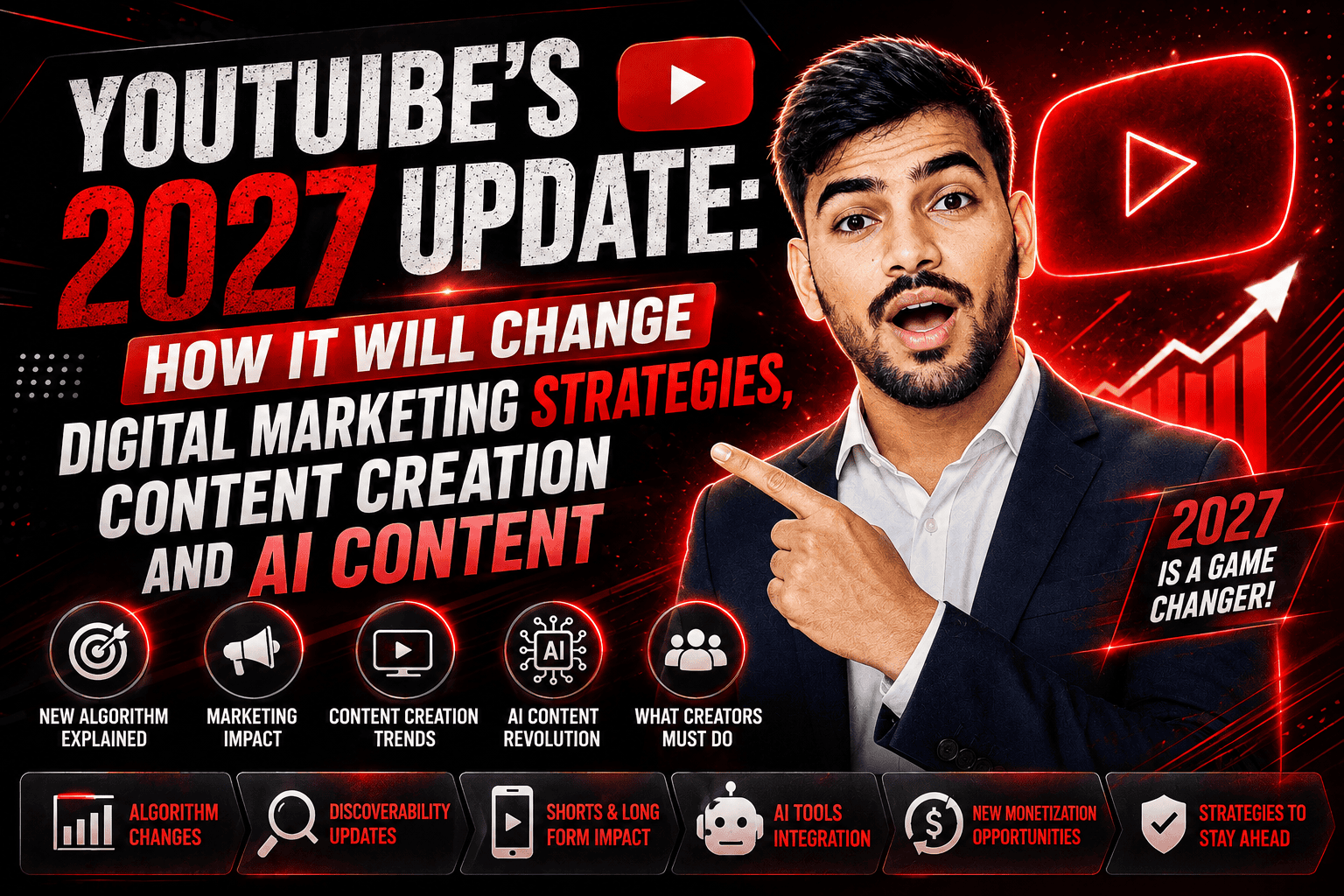
YouTube is changing the way new creators enter its Partner Program from February 1, 2027. The biggest change is the higher monetization threshold for new creators. YouTube will require 1,000 subscribers plus either 8,000 qualified watch hours in the previous 365 days or 20 million qualified Shorts views in the previous 90 days. The current thresholds are 4,000 watch hours or 10 million Shorts views. Existing creators already earning through the YouTube Partner Program will not lose their status because of this change.
This update matters beyond YouTube monetization. It can change how a content creator, brand, agency, and digital marketing team plans video content. Creators will need stronger audience retention, consistent publishing, better content quality, and more reliable ways to turn viewers into customers.
At the same time, YouTube continues to develop AI features and strengthen its approach to repetitive and mass-produced content. YouTube’s monetization policy already classifies mass-produced or repetitive videos as inauthentic content, while original and meaningfully different videos remain eligible for monetization.
What Is YouTube’s 2027 Update?
The YouTube 2027 Update mainly introduces new Partner Program entry requirements and additional changes around creator monetization.
Key changes at a glance
| Area | Current approach | From February 1, 2027 | Impact |
| Subscribers for full YPP | 1,000 | 1,000 | No change |
| Long-form watch hours | 4,000 | 8,000 | Higher barrier |
| Shorts views | 10 million/90 days | 20 million/90 days | Higher barrier |
| Existing YPP creators | Eligible | Status protected | Low direct impact |
| Fan funding | Available at lower threshold | No change announced | Opportunity remains |
| YouTube Shopping | Available at lower threshold | No change announced | Important revenue option |
| Repetitive content | Not monetizable | Policy continues | More important for AI channels |
| AI disclosure | Required for meaningful realistic alterations | Continues | More transparency |
YouTube has also stated that fan funding, Creator Partnerships, and YouTube Shopping eligibility will not change as part of the new YPP entry threshold. This gives smaller creators alternative ways to build revenue before reaching the higher ad-revenue threshold.
Why Is YouTube Raising the Monetization Threshold?
The biggest reason is the rapid growth of low-effort and mass-produced content.
AI tools now allow one person to create scripts, images, voiceovers, videos, thumbnails, and captions at a much faster rate. This has created opportunities for creators, but it has also increased the amount of repetitive content on the platform.
YouTube already clarified in 2025 that its monetization policy covers mass-produced and repetitive content under the term inauthentic content. The platform wants monetized channels to provide original value rather than simply produce large numbers of similar videos.
This creates an important lesson for every Ai Content Maker:
AI can help you produce content faster, but AI alone cannot create a strong YouTube strategy.
A creator should use AI to support research, scripting, editing, idea generation, subtitles, thumbnails, and workflow automation while adding original information, experience, opinions, examples, demonstrations, or storytelling.
YouTube 2027 Update and the Algorithm
One important point needs clarification: YouTube’s announced 2027 changes do not officially describe a completely new recommendation algorithm.
Many articles and social posts call the announcement an “algorithm update,” but the confirmed announcement focuses mainly on YPP eligibility, Shorts monetization, creator opportunities, and related changes. Therefore, marketers should not assume that YouTube has announced a completely new ranking formula.
Want More Customers From Google?
Get a practical SEO strategy built around your business, industry and target audience — without generic packages or risky shortcuts.
However, the monetization changes can still influence content strategy.
YouTube recommendations depend heavily on whether viewers find videos useful and continue watching them. Therefore, creators who want to reach the new thresholds will need to focus on:
- Strong video topics
- Better thumbnails
- Clear titles
- Higher audience retention
- Longer meaningful viewing sessions
- Consistent publishing
- Returning viewers
- Strong viewer satisfaction
- Original content
- Better channel structure
The strategic shift is simple: stop chasing views alone and start building repeat viewers.
How YouTube’s 2027 Update Will Affect Content Creators
The change will affect new creators more than established monetized channels. A creator who starts a new channel in 2027 will need twice the previous long-form watch-time requirement or twice the previous Shorts-view requirement. That means random uploads will become less useful.
1. Content quality will matter more
A creator cannot depend on uploading dozens of similar videos and waiting for one to become viral.
Instead, each video should answer a clear viewer need.
For example:
Weak strategy:
- “Best AI tools”
- “Best AI tools 2027”
- “Top AI tools”
- “Best AI tools for beginners”
- “AI tools you need to know”
These videos can easily become repetitive when they provide almost the same information.
Better strategy:
- Test five AI tools personally.
- Show real examples.
- Compare pricing and features.
- Explain which tool works for specific users.
- Show mistakes and limitations.
- Give practical results.
The second approach creates more original value.
2. Long-form Content Will Become More Important
The increase from 4,000 to 8,000 watch hours makes long-form content an important part of a new creator’s strategy.
Not Sure What's Holding Your Google Rankings Back?
Get a free consultation with our SEO experts. We'll understand your business, identify potential growth opportunities, and help you figure out what your website actually needs.
A creator should not simply make longer videos to increase watch time. Longer videos only help when viewers actually want to watch them.
A better approach involves creating:
- Tutorials
- Product comparisons
- Case studies
- Interviews
- Reviews
- Step-by-step guides
- Industry analysis
- Educational series
- Problem-solving videos
For example, a digital marketing creator can create a complete series around SEO instead of publishing disconnected videos.
Example content structure
| Content | Purpose |
| SEO basics | Attract beginners |
| Keyword research | Solve a specific problem |
| Technical SEO | Build authority |
| Link building | Serve advanced users |
| SEO case study | Build trust |
| SEO tools comparison | Support purchase decisions |
This structure can increase the chance that viewers move from one video to another.
3. Shorts Should Support the Main Strategy
Shorts remain useful for discovery, but creators should avoid building a strategy around random viral clips.
A better model is:
Short → Long-form video → Playlist → Subscriber → Product/service
For example, a digital marketing agency can publish a 30-second Short explaining one SEO mistake. The Short can direct interested viewers toward a detailed SEO tutorial.
This gives Shorts a clear role instead of treating them as the complete strategy.
4. AI Content Makers Need a Different Strategy
The rise of AI Content Maker tools creates both an opportunity and a risk.
AI can reduce production time significantly. A creator can use AI for:
- Topic research
- Video outlines
- Script drafts
- Subtitle generation
- Thumbnail ideas
- Translation
- Voice cleanup
- Editing assistance
- Content repurposing
- Social media captions
But YouTube’s policies make originality important. YouTube says monetized content should be original and non-repetitious, while mass-produced or repetitive material can fall under its inauthentic-content policy.
Therefore, the winning model is not:
AI → Generate → Upload → Repeat
It is:
Research → AI assistance → Human expertise → Original production → Review → Publish → Analyze
AI Disclosure Will Also Matter
YouTube requires creators to disclose certain AI-generated or meaningfully AI-altered content, especially realistic content that could make viewers believe something happened when it did not.
Examples include:
- Making a real person appear to say something they never said
- Altering footage of a real event
- Creating a realistic scene that never happened
YouTube provides an AI disclosure setting during the upload process for this type of content.
Creators should therefore build disclosure into their publishing checklist instead of treating it as an optional step.
How Digital Marketing Strategies Should Change
The YouTube 2027 Update can push marketers toward a more complete video marketing system.
Instead of asking:
“How many views did the video get?”
marketers should ask:
- How many qualified viewers watched?
- How long did they watch?
- Did they visit the website?
- Did they subscribe?
- Did they contact the business?
- Did they purchase?
- Which videos generated leads?
- Which topics generated returning viewers?
This shift makes YouTube more valuable as a business channel.
A better digital marketing funnel
| Stage | YouTube strategy | Marketing goal |
| Awareness | Shorts, educational videos | Reach |
| Interest | Tutorials and comparisons | Engagement |
| Consideration | Reviews and case studies | Trust |
| Conversion | Product/service videos | Leads |
| Retention | Series and community content | Repeat customers |
Competitor Analysis: What Current Top Results Are Doing
A review of current coverage around the YouTube 2027 changes shows a clear pattern.
Major technology publications such as The Verge focus strongly on the higher YPP thresholds and the effect on new creators. Other publications focus on the difficulty smaller creators may face when reaching monetization.
Community discussions add another perspective. Creator communities are already discussing the importance of starting before February 2027, maintaining consistent watch time, and using alternative monetization options such as Shopping and fan funding.
Competitor coverage comparison
| Competitor/content type | Main focus | What it misses | Opportunity |
| The Verge | YPP threshold changes | Limited marketing strategy | Explain business impact |
| Business Insider | Creator monetization | Less tactical guidance | Give actionable content plans |
| Creator communities | Practical creator reactions | Less structured analysis | Combine community insights with strategy |
| AI-focused content | AI workflows | Often focuses on tools | Explain originality and policy risks |
| Digital marketing blogs | Future marketing trends | Often broad | Connect YouTube directly to marketing funnels |
This article takes a broader approach by connecting the 2027 monetization changes with digital marketing, content creation, Shorts, long-form videos, AI Content Maker workflows, and business revenue.
7 Actionable Strategies for YouTube Creators in 2027
1. Build a content series
Do not depend on individual videos.
Create connected videos around one topic so viewers have a reason to watch the next video.
2. Focus on watch time, not just views
A video with 10,000 highly engaged views can provide more strategic value than a video with 100,000 viewers who leave quickly.
Track:
- Average view duration
- Audience retention
- Returning viewers
- Click-through rate
- Subscribers gained
- End-screen clicks
3. Use AI as an assistant
An AI Content Maker can speed up production, but you should add your own:
- Experience
- Testing
- Examples
- Opinion
- Data
- Demonstrations
- Visual explanations
This creates a meaningful difference between AI-assisted content and mass-produced content.
4. Create evergreen videos
Evergreen videos can continue bringing viewers months after publication.
Good examples include:
- How-to tutorials
- Beginner guides
- Software tutorials
- Product comparisons
- Industry explainers
- Educational content
5. Connect YouTube with your website
Digital marketing teams should not keep YouTube separate from the rest of their marketing system.
A video can support:
YouTube → Website → Lead Magnet → Email → Sales
Add relevant website links in descriptions and use videos to support important service and product pages.
6. Create content for different stages of the buyer journey
A business should not publish only promotional videos.
Use educational content to attract people first, then use comparison, case-study, demonstration, and product content to move them toward a purchase.
7. Start before the new threshold takes effect
New creators who want to qualify under the current YPP thresholds should understand the February 1, 2027 deadline and monitor their eligibility.
Creators who already qualify for YPP should also review the updated terms before the stated deadline. YouTube says existing YPP members are not affected by the new entry thresholds.
YouTube 2027 Content Strategy for Beginners
A beginner does not need expensive equipment or a large production team.
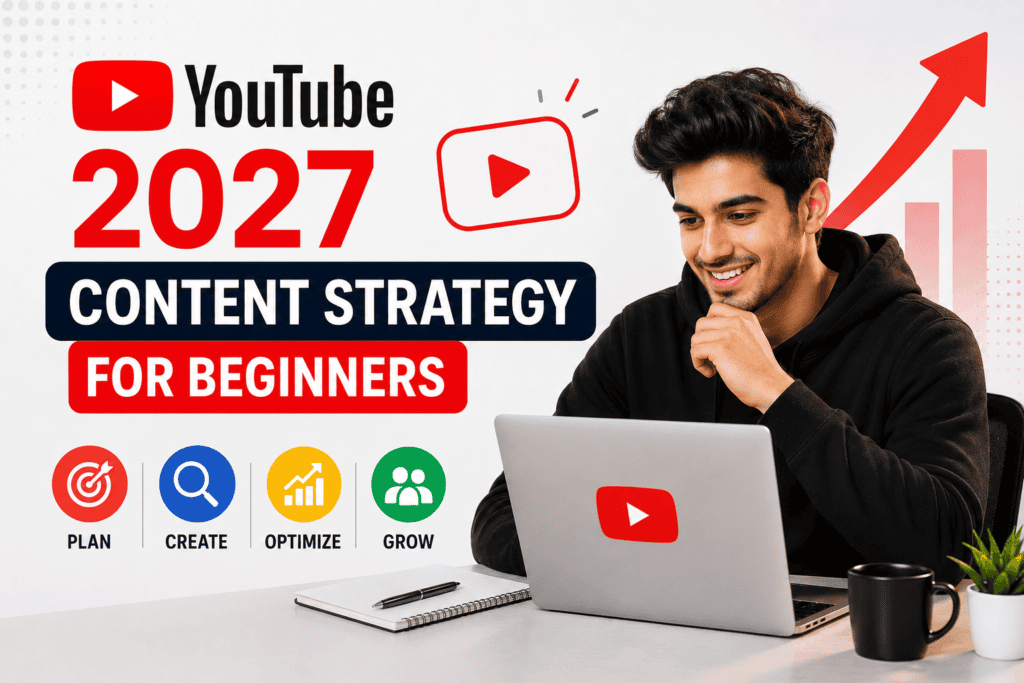
Start with a simple system:
- Step 1: Select one clear niche.
- Step 2: Identify 20–30 questions your audience asks.
- Step 3: Create long-form videos around the most useful questions.
- Step 4: Turn every useful section into Shorts.
- Step 5: Link related videos together.
- Step 6: Review analytics every week.
- Step 7: Improve the topics that generate strong retention.
This approach creates a content library instead of a collection of unrelated uploads.
What Marketers Should Stop Doing
The YouTube 2027 Update makes several old approaches less attractive.
Avoid:
- Uploading mass-produced AI videos
- Copying competitor scripts
- Repeating the same video with minor changes
- Chasing every viral trend
- Measuring success only through views
- Creating Shorts without a clear purpose
- Using misleading thumbnails
- Publishing videos without audience research
- Depending entirely on YouTube ad revenue
YouTube’s current monetization policies already warn against repetitive and mass-produced content, so creators should not wait until 2027 to change these practices.
The Biggest Opportunity for Digital Marketing
The higher monetization threshold may make YouTube more difficult for new creators, but it does not make YouTube less valuable for businesses.
In fact, businesses can use the platform without relying on YPP revenue.
A company can generate value from YouTube through:
- Product sales
- Service leads
- Affiliate income
- Sponsorships
- Brand partnerships
- YouTube Shopping
- Website traffic
- Email subscribers
- Community building
This makes YouTube a marketing channel rather than simply an advertising-revenue platform. For a digital marketing agency, this creates a strong opportunity to build YouTube campaigns around measurable business outcomes.
Conclusion
The YouTube 2027 Update changes the entry requirements for new creators and raises the level of consistency required to reach full YPP monetization. From February 1, 2027, new applicants will need 1,000 subscribers plus either 8,000 qualified watch hours or 20 million qualified Shorts views. Existing YPP creators will not lose their status because of these new entry requirements.
The bigger lesson goes beyond the numbers.
YouTube is moving toward a creator ecosystem where original content, audience value, consistent engagement, and multiple revenue sources matter more.
For a content creator, this means building a loyal audience instead of chasing one viral video. For digital marketing teams, it means connecting YouTube with the wider customer journey. For an Ai Content Maker, it means using AI to improve production without turning the channel into a collection of repetitive videos.
The creators who adapt early can build stronger channels before the new requirements take effect.
The best YouTube strategy for 2027 is simple: create useful content, build returning viewers, use AI carefully, measure real business results, and give people a reason to watch your next video.
Frequently Asked Questions
YouTube’s 2027 Update introduces higher eligibility requirements for new creators who want to join the YouTube Partner Program. From February 1, 2027, new applicants will need 1,000 subscribers and either 8,000 qualified watch hours or 20 million qualified Shorts views.
No. Existing YouTube Partner Program creators will not lose their status simply because of the new 2027 eligibility thresholds.
New creators will need to build a larger audience and generate more watch time or Shorts views before qualifying for full ad-revenue monetization. This makes consistent and useful content more important.
Yes, AI-assisted content can still appear on YouTube. However, creators should avoid mass-produced or repetitive videos. AI should support original content rather than replace meaningful creator input.
An AI Content Maker should use AI for research, scripting, editing, thumbnails, subtitles, and content ideas while adding original opinions, examples, demonstrations, and expertise to each video.
Yes. Shorts can help brands and creators reach new audiences quickly. However, marketers should connect Shorts with long-form videos, websites, products, or services instead of relying only on viral views.
Digital marketers should focus on audience retention, returning viewers, useful content, strong thumbnails, relevant keywords, consistent publishing, and measurable results such as leads, website visits, and sales.
No confirmed announcement says that YouTube will completely replace its recommendation algorithm in 2027. The confirmed changes mainly concern Partner Program eligibility and creator monetization.