
Searching for a “website designer near me” usually means one thing. You want someone reliable, someone you can actually talk to, and someone who won’t charge you a fortune for a basic website. That’s a fair expectation in 2026, especially with so many freelancers and agencies competing for your attention.
This guide breaks down everything you need to know before hiring a local website designer. We’ll cover pricing in India, what a good website should include, common mistakes businesses make, and how to pick the right person or team for your project. Growth Wealthh, an SEO and web design agency based in Delhi, works with small businesses across India, including many from Tier 2 and Tier 3 cities, so this article reflects what actually works on ground level, not just theory.
Why “Near Me” Still Matters in 2026
You might wonder why location matters when work happens online anyway. It’s a fair question. Here’s the honest answer: proximity still builds trust.
When a designer is based in your city or at least understands your market, communication gets easier. They understand local business culture, festival-based sales cycles, and how customers in your region actually shop online. A designer working with businesses in Jaipur or Lucknow understands things a designer sitting in another country simply won’t.
That said, “near me” today often means “reachable and responsive,” not necessarily “in the same building.” Many businesses in smaller cities now hire designers from Delhi or Bangalore who work remotely but stay available on call and WhatsApp. What matters most is trust, communication, and accountability.
What Does a Website Designer Actually Do?
A website designer near me isn’t just someone who makes your site “look nice.” A good one handles multiple layers of your online presence:
- Planning the website structure based on your business goals
- Designing pages that are easy to navigate on mobile and desktop
- Writing or guiding the content so it makes sense to visitors
- Making sure the site loads fast and works properly
- Adding basic SEO so people can actually find your website on Google
- Connecting payment gateways, forms, or booking systems if needed
If a designer only focuses on visuals and ignores speed, mobile experience, or SEO basics, your website will look good but won’t bring you customers. That’s the biggest mistake business owners make when hiring based on price alone.
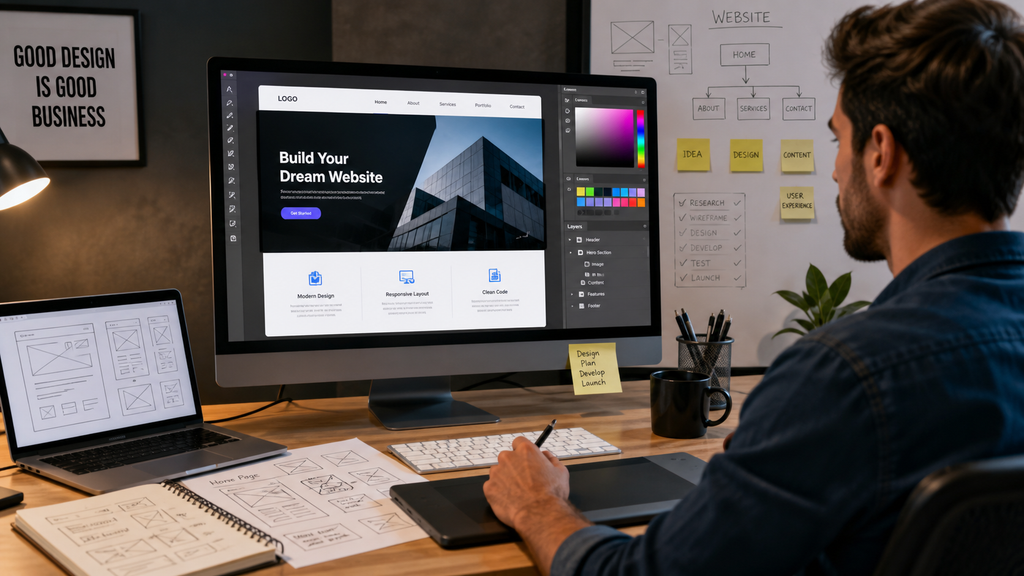
Website Designer vs Web Developer: What’s the Difference?
People often confuse these two roles. Here’s a simple way to understand it:
| Role | What They Do | Best For |
|---|---|---|
| Website Designer | Focuses on layout, visuals, user experience, and structure | Business websites, portfolios, landing pages |
| Web Developer | Focuses on coding, backend functionality, and technical systems | Custom apps, complex platforms, advanced features |
Most small businesses don’t need a full developer. A skilled designer who understands WordPress, Shopify, or similar platforms can handle 90% of what you need.
Website Designer Near Me: Cost in India (2026 Pricing Guide)
Let’s talk numbers, because this is usually the deciding factor. Pricing varies a lot depending on city, experience, and what you actually need. Here’s a realistic breakdown based on current market rates across India.
| Website Type | Typical Price Range (INR) | Best Suited For |
|---|---|---|
| Basic Business Website (5-6 pages) | ₹8,000 – ₹18,000 | Local shops, consultants, small service providers |
| Professional Business Website | ₹18,000 – ₹35,000 | Growing businesses, clinics, agencies |
| E-commerce Website | ₹25,000 – ₹60,000 | Online stores, D2C brands |
| Custom Website with Advanced Features | ₹60,000 and above | Large businesses, SaaS, custom platforms |
These prices are approximate and can shift based on design complexity, number of revisions, and whether you need copywriting or SEO included. Agencies in metro cities like Mumbai or Bangalore often charge higher than Tier 2 or Tier 3 city freelancers, even for similar quality work.
Why Affordable Doesn’t Mean Low Quality
There’s a common myth that cheap websites are always bad. That’s not true. What actually determines quality is the designer’s skill and process, not their price tag alone.
Growth Wealthh built its reputation around offering affordable digital marketing and website design services without cutting corners on quality. Founder Harsh Kumar SEO started as a self-taught SEO expert who understood early on that small Indian businesses need results, not fancy jargon or inflated invoices. That philosophy still shapes how pricing works today: fair rates, clear deliverables, and no hidden costs.
Want More Customers From Google?
Get a practical SEO strategy built around your business, industry and target audience — without generic packages or risky shortcuts.
If you’re comparing designers, don’t just look at the final price. Ask what’s actually included. A ₹10,000 website with no mobile optimization and no SEO basics isn’t cheaper than a ₹15,000 website that includes both.
What to Check Before Hiring a Website Designer Near Me
Not every designer who shows up in your Google search is the right fit. Here’s what actually matters.
1. Portfolio That Matches Your Industry
Ask to see websites they’ve built before, ideally in a similar industry. A designer who’s built restaurant websites might not be the best fit for a B2B manufacturing site, and that’s okay. Just make sure their style matches what you need.
2. Mobile-First Design Approach
Over 75% of Indian internet users browse on mobile phones. If a designer talks only about desktop layouts, that’s a red flag. Your website designer near me should design for mobile first, then adapt for desktop.
3. Basic SEO Knowledge
Your website won’t get traffic just because it exists. Ask if the designer includes basic on-page SEO: proper headings, image optimization, meta titles, and fast loading speed. If you need deeper SEO work later, you can explore professional SEO services separately.
4. Clear Timeline and Revisions Policy
Ask upfront: How many revisions are included? What’s the delivery timeline? Vague answers usually lead to frustrating delays later.
5. Post-Launch Support
Websites need occasional updates. Ask if the designer offers maintenance support after launch, and whether that costs extra.
Questions to Ask Before You Hire
Here’s a simple checklist you can literally copy and send to any designer you’re considering:
- Can you show me 3-4 recent website projects?
- Will the website be mobile-responsive?
- Do you include basic SEO setup?
- What’s the total cost, including hosting and domain?
- How many rounds of revisions are included?
- Will I get login access to edit content myself later?
- Do you offer support after the website goes live?
If a designer hesitates or gives unclear answers to these basic questions, take that as a signal.
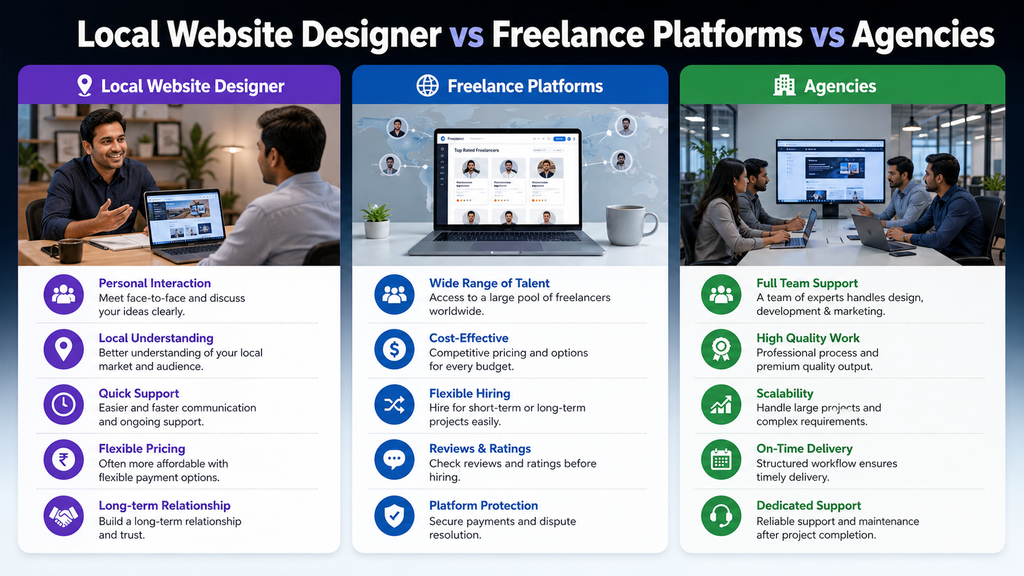
Local Website Designer vs Freelance Platforms vs Agencies
You have three main options when searching for a website designer near me. Each has trade-offs.
| Option | Pros | Cons |
|---|---|---|
| Local Freelancer | Personal attention, lower cost, easy communication | May lack advanced skills or backup support |
| Freelance Marketplace | Wide choice, competitive pricing | Quality varies, harder to verify reliability |
| Digital Agency | Full team, structured process, ongoing support | Slightly higher pricing than solo freelancers |
For businesses that want a website plus long-term digital growth, an agency often makes more sense. You get design, hosting guidance, and marketing support under one roof instead of juggling multiple vendors.
Why Small Businesses in Tier 2 and Tier 3 Cities Need Websites Now More Than Ever
Indian consumer behavior has shifted fast. Customers in cities like Indore, Coimbatore, Patna, and Surat now research businesses online before visiting them offline. Even a simple Google search for “best tailor near me” or “best dentist in [city]” pulls up businesses with websites far more often than those without one.
Not Sure What's Holding Your Google Rankings Back?
Get a free consultation with our SEO experts. We'll understand your business, identify potential growth opportunities, and help you figure out what your website actually needs.
Platforms like Meesho and Flipkart have also trained Indian shoppers to trust online buying more than ever. If your competitors are selling on these platforms while you’re relying only on word-of-mouth, you’re already behind. A website gives you something these marketplaces don’t: full control over your brand, pricing, and customer relationship.
Even a basic five-page website with your services, pricing, and contact details builds more trust than having no online presence at all.
Common Excuses Businesses Give (And Why They Don’t Hold Up)
- “My customers only find me through word of mouth.” That works until a customer wants to verify you online before recommending you to someone else.
- “Websites are expensive.” Not anymore. Basic websites now start under ₹10,000 in most cities.
- “I don’t understand technology.” You don’t need to. A good designer handles the technical side while you focus on running your business.
What Makes a Website Actually Grow Your Business
A website that just “exists” won’t do much for you. Here’s what separates a website that grows your business from one that just sits there collecting dust.
Clear Call-to-Actions
Every page should guide visitors toward an action: call now, book a demo, fill a form, or buy a product. Without clear CTAs, visitors leave without doing anything.
Fast Loading Speed
Indian users on mobile data don’t wait around for slow websites. If your site takes more than 3-4 seconds to load, you lose visitors before they even see your content.
Trust Signals
Testimonials, certifications, real photos, and clear contact information all build trust. Stock photos and vague “About Us” pages don’t.
SEO-Friendly Structure
Your website should be built in a way that search engines can understand and rank easily. This includes proper headings, fast hosting, and clean URLs. If you want your website to actually rank on Google, pairing good design with ongoing local SEO services makes a real difference, especially for businesses targeting customers in a specific city or region.
How Long Does It Take to Build a Website?
Timelines depend on complexity, but here’s a general idea:
| Website Type | Typical Timeline |
|---|---|
| Basic Business Website | 3 – 7 days |
| Professional Website with Custom Design | 7 – 15 days |
| E-commerce Website | 15 – 30 days |
Delays usually happen because of slow content approval from the client side, not the designer. If you want a quick turnaround, keep your content, images, and business details ready before the project starts.
Should You Choose WordPress, Shopify, or a Custom Website?
This decision depends on what your business actually needs.
- WordPress: Great for business websites, blogs, and service-based businesses. Flexible and cost-effective.
- Shopify: Best for online stores that need built-in payment and inventory management.
- Custom-coded website: Needed only for advanced functionality that ready-made platforms can’t handle.
For most small and mid-sized Indian businesses, WordPress remains the most practical and affordable choice. It’s also easier to update later without depending entirely on a developer.
How Growth Wealthh Approaches Website Design
Growth Wealthh focuses on building websites that are simple to use, fast to load, and structured for search visibility from day one. Instead of treating design and SEO as separate services, the goal is to combine both, so your website doesn’t just look professional but also has a real chance of ranking on Google.
Harsh Kumar SEO built this approach based on real client results rather than theory, working directly with small businesses that needed practical, budget-friendly solutions instead of expensive corporate-style packages. If you’re a business owner in a Tier 2 or Tier 3 city looking for a website designer near me who understands both design and digital marketing, that combination matters more than choosing based on price alone.
Website Designer Free Consultation : Click Here
If you already have a website and want to check how it’s performing, you can also look into a website audit service before investing in a redesign. Sometimes fixing existing issues costs less than starting from scratch.
Mistakes to Avoid When Hiring a Website Designer
- Choosing the cheapest option without checking what’s included
- Skipping mobile responsiveness checks before approving the final design
- Ignoring SEO basics during the design phase
- Not asking who owns the domain and hosting after project completion
- Approving a design without reviewing it on an actual phone screen
Avoiding these mistakes alone can save you thousands of rupees and weeks of frustration later.
Final Thoughts
Finding the right website designer near me isn’t about picking the first name that shows up on Google. It’s about finding someone who understands your business, communicates clearly, and builds something that actually works for your customers, not just something that looks nice in a portfolio.
Whether you’re a small shop owner in a Tier 3 city or a growing startup in a metro, a well-built website remains one of the most affordable long-term investments you can make for your business. With clear pricing, honest communication, and a focus on real results, Growth Wealthh continues to help Indian businesses build websites that don’t just sit online but actually bring in customers.
Frequently Asked Questions
1. How much does it cost to hire a website designer near me in India?
Basic websites usually start around ₹8,000 to ₹18,000, while professional or e-commerce websites can range from ₹25,000 to ₹60,000 depending on features and design complexity.
2. Do I need a local designer, or can I hire someone remotely?
You don’t need someone physically nearby. Many businesses successfully hire remote designers who understand their industry and stay responsive through calls and WhatsApp.
3. How long does it take to build a business website?
A basic business website usually takes 3 to 7 days, while more detailed or e-commerce websites can take up to 30 days.
4. Is WordPress better than Shopify for small businesses?
WordPress works well for service-based businesses and blogs, while Shopify is better suited for online stores that need built-in payment and inventory features.
5. Does my website need SEO from the start?
Yes. Basic SEO during the design phase, like proper headings and fast loading speed, helps your website perform better on Google from day one.
6. Can I edit my website myself after it’s built?
Most designers using WordPress provide login access, so you can update text, images, or basic content without needing technical help every time.