

If you’ve ever felt like your blog posts, Instagram captions, and website copy don’t connect with each other, you’re not alone. Most businesses post content without a real plan, and it shows how scattered everything feels. This is exactly where a content pillar comes in.
So, what is a content pillar? In simple words, it’s the main topic that holds your entire content plan together. Every blog post, social post, or video you create should trace back to one of these core topics. Once you understand this idea, planning content becomes a lot easier and far less random.
In this article, we’ll break down what a content pillar means, the different types, real examples, and the exact steps to build one for your own business.
What Is a Content Pillar?
A content pillar is a core topic or theme that acts as the foundation for all the content a brand creates. It’s usually a broad subject that matters to your audience and connects directly to what your business offers.
Think of it as the trunk of a tree. Smaller topics, known as content clusters, branch out from this trunk. Each cluster covers one specific angle of the main topic in more depth, and every branch links back to the trunk.
For example, if you run a digital marketing agency, one of your content pillars could be “SEO Services.” From there, you can create separate articles on keyword research, on-page SEO, local SEO, and link building. Each piece supports the main pillar and helps search engines understand what your website is really about.
Why Content Pillars Matter for Your Business
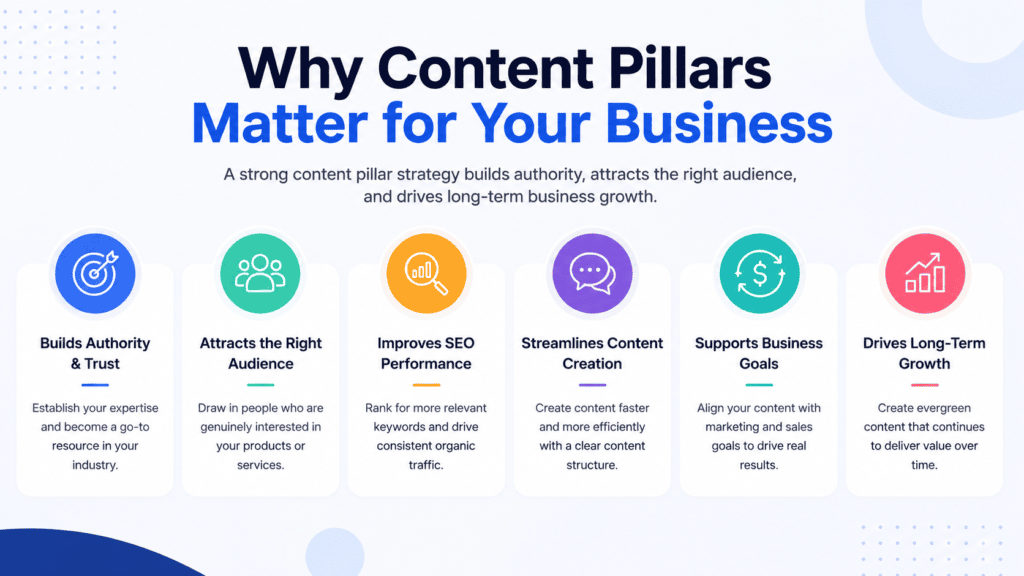
Content pillars aren’t just a planning trick you read about once and forget. They genuinely change how your content performs over time. Here’s why they matter:
- They keep your message consistent. When every piece of content ties back to a pillar, your brand feels organized instead of random and disconnected.
- They help with SEO. Search engines tend to reward websites that cover a topic in depth, rather than ones posting scattered, unrelated content.
- They save time. Once you set your pillars, you’re not staring at a blank page wondering what on earth to post next.
- They build authority. Publishing consistently around a few core topics signals real expertise to both readers and search engines.
- They make teamwork easier. A content writer or marketing team can plan a month of posts just by picking sub-topics under each existing pillar.
For any business offering digital marketing services, content pillars are often the starting point before a single blog post even gets written. It’s planning work, but it pays off later.
Content Pillar vs Content Cluster: What’s the Difference?
People often mix these two terms up, and it’s easy to see why. Here’s a simple table to clear up the confusion.
| Aspect | Content Pillar | Content Cluster |
|---|---|---|
| Meaning | The broad, core topic | Smaller topics linked to the pillar |
| Length | Usually long and detailed | Shorter and more specific |
| Goal | Builds topic authority | Answers detailed reader questions |
| Example | “Complete Guide to Digital Marketing” | “How to Run a Facebook Ad Campaign” |
| Linking | Links out to cluster content | Links back to the pillar page |
In short, the pillar is the big umbrella topic, and clusters are the smaller, focused pieces that sit underneath it. You need both working together for the structure to actually help your SEO.
Types of Content Pillars
Content pillars aren’t limited to blogs alone. Different platforms use the same basic idea in slightly different ways.
Blog and SEO Content Pillars
This is the most common type, and it’s central to most SEO services today. A pillar page is a long, detailed page built around one broad topic. It links out to smaller blog posts, called clusters, that each cover a specific sub-topic in more detail. This structure helps search engines see your website as a genuine authority on that subject, not just a random collection of posts.
Social Media Content Pillars
On social media, content pillars work a little differently. Here, they’re the three to five core themes that guide what you post day to day. For instance, a bakery’s social media content pillars might be recipes, behind-the-scenes videos, customer photos, and daily specials. Every single post falls under one of these buckets, which keeps the feed feeling planned rather than random.
Want More Customers From Google?
Get a practical SEO strategy built around your business, industry and target audience — without generic packages or risky shortcuts.
Video and YouTube Content Pillars
YouTube creators often build their channel around three or four broad themes too, such as tutorials, product reviews, and personal stories. Viewers start to know what kind of content to expect from the channel, which is often why they subscribe and keep coming back.
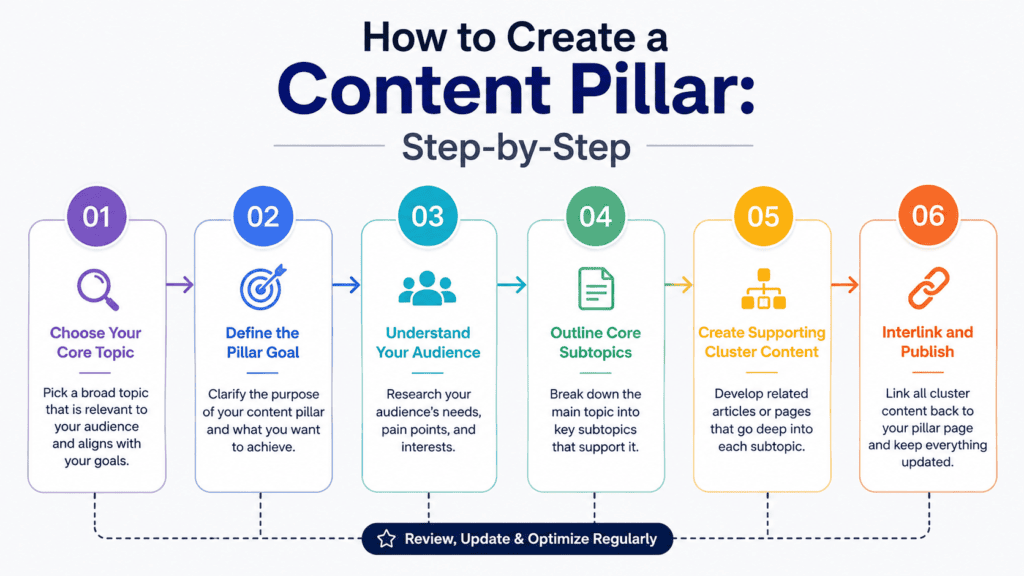
How to Create a Content Pillar: Step-by-Step
Building a content pillar isn’t complicated once you break it down into steps.
- Understand your audience first. Find out what questions, problems, or interests your target audience actually has, not what you assume they have.
- Pick three to five core topics. Choose broad subjects that connect naturally to your business and matter to your audience.
- Research keywords for each topic. Find out what people genuinely type into Google related to each pillar you’ve chosen.
- Create one detailed pillar page per topic. This page should cover the topic broadly and link out to smaller, related articles underneath it.
- Build cluster content around it. Write shorter, focused posts that answer specific questions under each pillar, and link them back to the main page.
- Repurpose content across channels. Turn parts of your pillar content into social posts, email newsletters, or short videos.
- Review and update it regularly. Refresh your pillar pages every few months so the information stays accurate and useful.
A skilled content writer can usually turn one solid pillar topic into ten or more pieces of smaller content without repeating the same points twice.
Content Pillar Examples by Business Type
Here are a few examples to help you picture how this plays out for different kinds of businesses.
| Business Type | Possible Content Pillars |
|---|---|
| Digital marketing agency | SEO tips, social media strategy, paid ads, website design |
| Online store | Product guides, shipping and returns, customer reviews, seasonal offers |
| Real estate agency | Home buying tips, market updates, home loan guidance, property listings |
| Restaurant or cafe | Menu highlights, behind-the-scenes content, customer stories, local events |
| Software or SaaS company | Product tutorials, industry trends, customer support tips, integrations |
These are only starting points. Your own pillars should reflect what your specific audience actually cares about, not what a generic list suggests.
Common Mistakes to Avoid
Even a solid idea can go wrong when it’s applied the wrong way. Watch out for these common mistakes:
- Choosing too many pillars. More than five pillars makes your content feel unfocused. Stick to a handful that truly matter to your business.
- Picking topics with no real audience interest. A pillar only works if people are actually searching for it or genuinely interested in it.
- Forgetting to link clusters back to the pillar. Without internal links, search engines can’t connect the dots between your pages properly.
- Never updating pillar content. Old, outdated pillar pages tend to lose rankings over time. Set a reminder to review them every few months.
- Copying pillars straight from competitors. What works for one business may not fit your audience, tone, or goals at all.
How Content Pillars Support Your SEO Strategy
Search engines want to show users the most helpful, well-organized websites available. When you group your content around clear pillars and clusters, you make it far easier for search engines to understand your site’s overall structure.
This approach, often called the pillar-cluster model, is one of the more reliable ways to improve organic rankings over time. It’s also why many SEO services now start every content project by mapping out pillars before a single article gets written.
If your business currently posts content without any real structure, switching to a pillar-based plan is one of the simplest changes you can make. At Growth Wealthh, this is usually one of the first steps taken with a new client’s content and SEO plan, because it sets the direction for everything that follows.
Free Consultation: Best Digital Marketing Services
Final Thoughts
A content pillar might sound like a simple idea, but it can completely change how organized your content feels. Once you pick your core topics and build cluster content around them, planning what to post next stops being a guessing game every week.
Start small. Pick three topics that genuinely matter to your audience, and build outward from there. This simple structure can make your content strategy far more effective and much easier to manage, no matter what stage your business is at right now.
Not Sure What's Holding Your Google Rankings Back?
Get a free consultation with our SEO experts. We'll understand your business, identify potential growth opportunities, and help you figure out what your website actually needs.
Frequently Asked Questions
A content pillar is the main topic your content is built around. Every blog post, video, or social update connects back to one of these core themes.
A content pillar is the topic itself, while a pillar page is the actual webpage you create to cover that topic in real detail.
Most businesses do well with three to five pillars. Too many makes your content feel scattered, while too few limits your topic coverage.
No. A content pillar is the broad topic, while a content cluster is a group of smaller, related articles that support and explain it.
It’s a good idea to review pillar pages every few months, especially if the topic changes quickly or new information becomes available.
Yes. Content pillars are especially useful for small businesses because they help you plan content without needing a large marketing team.
On social media, a content pillar is one of the three to five core themes a brand consistently posts about, like tips, behind-the-scenes content, or customer stories.
Yes. When structured well with internal linking, content pillars help search engines understand your site’s topic authority, which can support better rankings over time.