Digital marketing services are professional strategies and tools that businesses use to promote their products or services through online channels. These services include SEO, social media marketing, content marketing, pay-per-click advertising, email marketing, video marketing, and web analytics. In India, the digital marketing industry is projected to reach ₹35,000 crore by the end of 2026, driven by 900+ million internet users and explosive mobile-first adoption. Businesses that invest in digital marketing services see an average of 3.2x higher ROI compared to traditional advertising methods.
What Are Digital Marketing Services?
Digital marketing services refer to a broad ecosystem of online promotional strategies that businesses deploy to reach, engage, and convert their target audiences across digital platforms. These services combine data, creativity, technology, and consumer psychology to deliver measurable results. Unlike traditional marketing, digital marketing gives businesses real-time insights, precise targeting, and the ability to optimise campaigns mid-flight.
In India’s rapidly evolving digital landscape of 2026, businesses across all sectors – from startups in Bengaluru to legacy enterprises in Mumbai – actively invest in digital marketing services to stay competitive. The internet user base in India now exceeds 950 million people, and 78% of buying decisions begin with an online search. This shift makes digital marketing services not just a choice but a fundamental business necessity.
Digital marketing services operate across multiple channels simultaneously. A well-rounded strategy integrates SEO, paid advertising, social media, email campaigns, content creation, and conversion rate optimisation into one cohesive growth system. Brands that treat these channels as isolated tactics miss the compounding power of an integrated digital ecosystem.
Why Digital Marketing Services Matter More Than Ever in India
India’s digital economy has entered a new phase of maturity in 2026. The government’s Digital India initiative has connected over 600,000 villages to broadband internet, creating a massive new market of first-time digital consumers. Tier 2 and Tier 3 cities like Indore, Coimbatore, Patna, and Surat now generate significant e-commerce revenue, and businesses that reach these audiences through digital marketing services gain a decisive advantage.
The UPI transaction volume in India crossed ₹200 lakh crore in 2025, confirming that Indian consumers are deeply comfortable with digital commerce. With the average Indian spending over 7 hours daily on the internet – across OTT platforms, social media, and news portals – the opportunity for digital reach has never been wider. Smart businesses are capturing this attention through well-designed digital marketing service campaigns.
India’s advertising industry continues to shift its budget from television and print to digital. In 2026, digital ad spend in India accounts for over 55% of the total advertising budget across industries. This confirms that businesses recognise where their customers live and where they make decisions.
Core Digital Marketing Services Every Business Needs
Search Engine Optimisation (SEO)
SEO is the process of optimising a website to rank higher on search engine result pages (SERPs) organically. Businesses that rank on the first page of Google capture over 91% of all search traffic. SEO in 2026 goes far beyond keyword stuffing – it now demands technical excellence, E-E-A-T compliance (Experience, Expertise, Authoritativeness, Trustworthiness), and AI-driven content strategies.
In India, local SEO has become a dominant sub-strategy. With 68% of consumers using “near me” searches to find local services, businesses optimise their Google Business Profiles, gather customer reviews, and build localised landing pages to capture hyper-local demand. Voice search optimisation is also a growing priority, with regional language queries in Hindi, Tamil, Bengali, and Telugu increasing by 43% in 2025.
Technical SEO in 2026 includes Core Web Vitals optimisation, structured data markup, mobile-first indexing compliance, and AI-generated content quality audits. Google’s Helpful Content System now ranks content based on genuine user value, making high-quality, expert-written content essential for sustainable rankings.
Pay-Per-Click Advertising (PPC)
PPC advertising allows businesses to place ads directly in front of potential customers on search engines and social platforms by paying for each click received. Google Ads, Meta Ads, and YouTube Ads remain the three dominant PPC platforms in India in 2026. PPC delivers immediate visibility, making it ideal for product launches, seasonal promotions, and competitive markets.
India’s PPC market has grown 34% year-over-year in 2025, driven by increased digital literacy and the rise of D2C (Direct-to-Consumer) brands. Smart bidding strategies powered by AI now allow advertisers to maximise conversions automatically by adjusting bids based on real-time user signals such as location, device, time, and browsing history.
Effective PPC campaigns require thorough keyword research, compelling ad copy, high-converting landing pages, and continuous A/B testing. A poorly managed PPC account burns budget without results, while a well-optimised account delivers consistent returns in the range of ₹4–₹8 for every ₹1 spent in competitive Indian markets.
Want More Customers From Google?
Get a practical SEO strategy built around your business, industry and target audience — without generic packages or risky shortcuts.
Social Media Marketing (SMM)
Social media marketing involves creating, publishing, and promoting content across platforms like Instagram, Facebook, LinkedIn, YouTube, and the rapidly growing Moj and Josh (Indian short-video platforms). In 2026, India has over 650 million active social media users, making it the second-largest social media market in the world after China.
Instagram Reels, YouTube Shorts, and LinkedIn newsletters have emerged as the dominant content formats. Brands that invest in short-form video content on social media record engagement rates three times higher than those posting only static images. Influencer marketing, a key component of social media strategy, generates an average ROI of 5.2x for Indian brands partnering with micro-influencers (10,000–100,000 followers) in niche categories.
Social media marketing also drives community building, brand trust, and customer service. Companies that respond to social media queries within one hour report 25% higher customer satisfaction scores, reinforcing the importance of active community management as part of digital marketing services.
Content Marketing
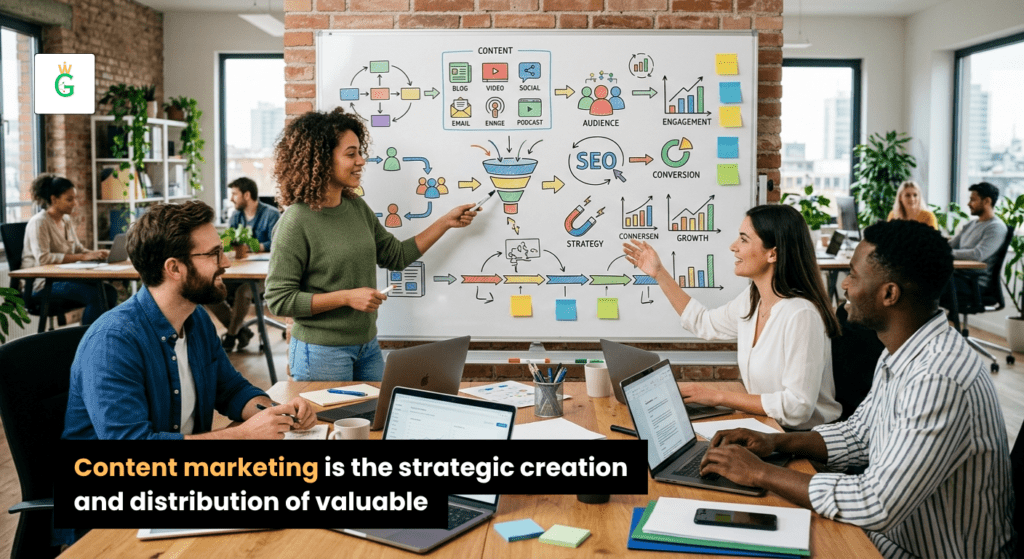
Content marketing is the strategic creation and distribution of valuable, relevant content to attract and retain a clearly defined audience. This includes blog articles, whitepapers, case studies, infographics, podcasts, webinars, and video series. Content marketing builds long-term brand authority and fuels SEO, social media, and email strategies simultaneously.
India’s content consumption in regional languages has exploded. In 2026, 62% of all online content consumption happens in languages other than English. Businesses that create content in Hindi, Marathi, Kannada, and other regional languages tap into previously inaccessible audience segments. Content marketing produces three times more leads than outbound marketing at 62% less cost, making it one of the highest-ROI digital marketing services available.
The rise of AI writing assistants has dramatically reduced content production costs. However, businesses must balance AI efficiency with human expertise and original insights. Google’s algorithms actively detect and downrank thin, generic AI content, rewarding content that demonstrates real-world experience and depth of knowledge.
Email Marketing
Email marketing remains the highest ROI digital channel globally, delivering an average return of ₹3,600 for every ₹100 spent. Despite the rise of messaging apps, email marketing in India continues to grow, with the number of active email users expected to cross 600 million by the end of 2026. Businesses use email to nurture leads, retain customers, announce offers, and drive repeat purchases.
Modern email marketing services include advanced segmentation, behavioural triggers, personalisation at scale, and AI-powered send-time optimisation. Automated email sequences – such as welcome series, cart abandonment flows, and re-engagement campaigns – generate revenue around the clock without manual intervention.
Compliance with India’s data protection regulations under the Digital Personal Data Protection (DPDP) Act 2023 is mandatory for all email marketing activities. Businesses must obtain explicit consent, offer clear unsubscribe options, and handle user data responsibly. Non-compliance results in penalties up to ₹250 crore under DPDP regulations.
Video Marketing
Video is the fastest-growing content format in India’s digital landscape. YouTube has over 500 million monthly active users in India in 2026, making it the most-watched video platform in the country. OTT platforms, Instagram Reels, and LinkedIn video posts collectively reach billions of views every month. Businesses that incorporate video marketing into their digital strategy see 49% faster revenue growth compared to those that don’t.
Video marketing services include scripting, production, post-production, platform optimisation, and performance tracking. Short-form videos under 60 seconds drive the highest engagement on Instagram and YouTube Shorts, while long-form educational videos on YouTube build authority and SEO value. Live video streaming on Instagram and Facebook drives real-time product demos, Q&A sessions, and brand events.
Web Analytics and Conversion Rate Optimisation (CRO)
Data without action is just numbers. Web analytics services transform raw traffic data into strategic decisions. Google Analytics 4 (GA4), along with heat mapping tools like Hotjar and Microsoft Clarity, help businesses understand exactly how users behave on their websites. Businesses that regularly analyse and act on analytics data improve their marketing efficiency by up to 40%.
Not Sure What's Holding Your Google Rankings Back?
Get a free consultation with our SEO experts. We'll understand your business, identify potential growth opportunities, and help you figure out what your website actually needs.
CRO focuses on increasing the percentage of website visitors who complete a desired action – such as making a purchase, filling out a form, or calling a business. Small improvements in conversion rates produce dramatic revenue increases without increasing ad spend. A website converting at 3% instead of 1.5% doubles revenue from the same traffic, making CRO one of the most cost-effective digital marketing services available.
Information Table: Digital Marketing Services at a Glance (India 2026)
| Service | Primary Goal | Avg. Monthly Cost (INR) | Avg. ROI | Time to Results |
| SEO | Organic traffic & rankings | ₹15,000 – ₹80,000 | 5x – 12x | 3 – 6 months |
| PPC (Google/Meta Ads) | Immediate paid traffic | ₹20,000 – ₹2,00,000 | 4x – 8x | Immediate |
| Social Media Marketing | Brand awareness & engagement | ₹10,000 – ₹60,000 | 3x – 6x | 1 – 3 months |
| Content Marketing | Authority & lead generation | ₹12,000 – ₹50,000 | 3x – 7x | 4 – 8 months |
| Email Marketing | Customer retention & sales | ₹5,000 – ₹20,000 | 36x | 1 – 2 months |
| Video Marketing | Engagement & brand storytelling | ₹25,000 – ₹1,50,000 | 5x – 10x | 2 – 4 months |
| Web Analytics & CRO | Conversion improvement | ₹10,000 – ₹40,000 | 4x – 9x | 2 – 3 months |
Comparison Table: In-House vs. Agency vs. Freelancer for Digital Marketing Services
| Factor | In-House Team | Digital Marketing Agency | Freelancer |
| Cost | High (salaries + tools) | Mid-to-High (retainer) | Low-to-Mid (per project) |
| Expertise Range | Limited | Full-service, multi-specialist | Narrow (one or two skills) |
| Scalability | Slow | Fast | Limited |
| Accountability | Direct | Contractual | Variable |
| Tool Access | Must purchase separately | Included in service | Often limited |
| Strategic Depth | Dependent on internal talent | High | Low-to-Mid |
| Best For | Large enterprises | SMEs & growth-stage brands | Startups & solo projects |
| Time to Onboard | 1 – 3 months | 2 – 4 weeks | 1 – 2 weeks |
How Digital Marketing Services Work: The Full Funnel Explained
Effective digital marketing services operate across every stage of the customer journey – from first awareness to loyal advocacy. The marketing funnel begins when a potential customer discovers a brand through a Google search, a social media post, or a YouTube video. This awareness stage demands strong SEO and content marketing to ensure the business appears in front of the right audience at the right moment.
The consideration stage follows, where potential customers research the product or service through comparison articles, case studies, and reviews. Content marketing, remarketing ads, and email nurturing sequences keep the brand visible and persuasive during this critical research phase. Businesses that engage prospects at this stage with relevant content close deals 50% faster than those that don’t.
The conversion stage transforms a prospect into a paying customer through compelling offers, streamlined checkout experiences, and trust signals like testimonials and guarantees. CRO directly impacts this stage, ensuring that website design, copy, and user experience maximise purchase completion rates.
Post-purchase, email marketing, loyalty programs, and social media engagement convert one-time buyers into repeat customers and brand advocates. The lifetime value (LTV) of a retained customer is 5x higher than the cost of acquiring a new one, making post-purchase digital marketing services equally vital to business growth.
Latest Digital Marketing Trends in India 2026
India’s digital marketing landscape evolves at a remarkable pace. The most significant trend of 2026 is the integration of Artificial Intelligence into every layer of digital marketing. AI tools now write first drafts of content, optimise PPC bids in real-time, personalise email subject lines at scale, and predict consumer behaviour with 87% accuracy.
Generative AI for ad creative production has reduced creative production timelines from days to hours. Indian brands now test dozens of ad variations simultaneously using AI-generated visuals and copy, selecting winners faster and reducing creative costs by 60%. However, human oversight remains essential – AI generates quantity, but human marketers ensure brand voice, cultural sensitivity, and strategic alignment.
WhatsApp Business marketing has emerged as a dominant channel in India in 2026. With over 700 million WhatsApp users in India, businesses use WhatsApp broadcast lists, chatbots, and the WhatsApp Business API to send personalised offers, order updates, and customer support messages directly to consumers’ most-used communication app. WhatsApp marketing campaigns in India record open rates exceeding 90%, far surpassing email.
The creator economy continues to mature. Indian content creators on YouTube, Instagram, and emerging platforms now command significant brand partnerships. Performance-based influencer marketing – where creators earn commissions on verified sales – is replacing flat-fee sponsorships, aligning creator incentives with brand outcomes. Vernacular content creators in regional languages attract brand investment for the first time at scale.
Regional language digital marketing has moved from a niche tactic to a mainstream strategy. Brands creating campaigns in Bhojpuri, Marathi, Odia, and other regional languages report 2.5x higher engagement rates than equivalent English campaigns targeting similar demographics. Voice search in regional languages, combined with hyperlocal targeting on Google and Meta, unlocks Tier 3 market audiences that were previously unreachable.
Case Study: How a D2C Skincare Brand from Pune Scaled to ₹5 Crore Revenue Using Digital Marketing Services
Brand: NaturRoot (name anonymised for privacy)
Industry: D2C Skincare and Wellness
Location: Pune, Maharashtra
Timeframe: January 2025 – December 2025
The Challenge: NaturRoot launched in late 2024 with a strong product line of Ayurvedic skincare products but zero digital presence. The founders had a limited budget of ₹3 lakh per month for marketing and needed to build brand awareness, drive online sales, and compete against established players like Mamaearth and WOW Skin Science.
The Digital Marketing Strategy:
A full-funnel digital marketing services approach was deployed across six channels simultaneously.
The team built the SEO foundation first – optimising product pages for high-intent keywords like “best Ayurvedic face cream India,” creating a weekly blog addressing skincare concerns specific to Indian skin types, and setting up a Google Business Profile for local discovery. Within six months, organic traffic grew from 0 to 42,000 monthly visitors.
Meta Ads (Facebook and Instagram) drove awareness and retargeting. The team ran video creatives showcasing ingredient stories and founder authenticity – content that resonated strongly with the 25–38 age female demographic. Dynamic product ads retargeted website visitors with personalised product recommendations, recovering 18% of abandoned carts.
A WhatsApp marketing funnel captured leads from the website, delivered a personalised skincare quiz, and recommended products based on quiz answers. The quiz completion rate was 74%, and quiz participants converted at 4.2x the rate of standard website visitors.
Micro-influencer partnerships with 45 beauty creators (between 15,000 and 80,000 followers) generated authentic product reviews and drove 22% of total sales through affiliate links. The average cost per influencer post was ₹8,000, making it the most cost-efficient channel for the brand.
Email marketing sequences delivered post-purchase education content, replenishment reminders at the 30-day and 60-day marks, and loyalty rewards to repeat purchasers. The email-driven repeat purchase rate reached 38%.
The Results:
- Revenue grew from ₹0 to ₹5.2 crore in 12 months
- ROAS (Return on Ad Spend) averaged 6.8x across paid channels
- Organic SEO contributed 34% of total revenue with zero ongoing ad cost
- Customer acquisition cost (CAC) reduced by 42% in the second half of the year as organic and referral channels scaled
- Email list grew to 78,000 subscribers with a 31% open rate
Key Takeaway
Integrated digital marketing services – combining SEO, paid social, WhatsApp, influencer marketing, and email – delivered compounding results that no single channel could have achieved alone. The brand’s willingness to create authentic, India-specific content in English and Marathi was critical to its success.
How to Choose the Right Digital Marketing Services Provider in India
Selecting the right digital marketing services partner is a business-critical decision. The Indian market has thousands of agencies, ranging from global giants to boutique specialists. Businesses must evaluate potential partners across five key dimensions before signing any contract.
First, examine the agency’s track record with businesses in your industry and at your scale. An agency that excels at e-commerce brands may lack the B2B expertise needed for a SaaS company. Request case studies with specific metrics – revenue growth, ROAS, organic traffic improvements – not just vague testimonials.
Second, assess the agency’s technology stack. Leading digital marketing service providers in 2026 use AI-powered tools for keyword research (Ahrefs, Semrush), social listening (Brandwatch, Sprinklr), marketing automation (HubSpot, Klaviyo), and data visualisation (Looker Studio, Tableau). Agencies still relying entirely on manual processes will deliver slower and less precise results.
Third, evaluate their communication standards. A good agency provides monthly performance reports with clear explanations of what worked, what didn’t, and what will change. Agencies that obscure results behind vanity metrics like “impressions” and “reach” without connecting them to revenue are not managing your business effectively.
Fourth, understand the contract structure. Month-to-month retainers give businesses flexibility; long-term contracts may offer better rates but lock businesses into underperforming partnerships. Ensure the contract clearly outlines deliverables, reporting frequency, and what happens if agreed-upon KPIs are not met.
Fifth, prioritise cultural fit and proactive communication. The best digital marketing partnerships work because the agency understands the client’s business deeply and proactively brings new ideas rather than waiting for instructions. Schedule an initial strategy call and observe whether the agency asks smart questions about your business goals, customer profile, and competitive landscape.
Digital Marketing Services Pricing in India: What to Expect
Pricing for digital marketing services in India varies significantly based on the scope of work, agency reputation, and channel mix. Startups and small businesses can access professional digital marketing services starting at ₹15,000–₹25,000 per month for basic SEO and social media management. Mid-sized businesses typically invest ₹50,000–₹1,50,000 per month for comprehensive multi-channel campaigns.
Enterprise-level digital marketing retainers with full-service agencies in cities like Mumbai, Delhi, and Bengaluru range from ₹2,00,000 to ₹10,00,000 per month, inclusive of strategy, creative production, media buying, and analytics. These retainers typically include dedicated account managers, weekly performance calls, and access to premium marketing technology platforms.
Ad spend is separate from agency fees. For PPC campaigns on Google and Meta, businesses typically allocate a minimum of ₹20,000–₹30,000 per month in ad spend to generate meaningful data and results. Scaling ad spend to ₹1,00,000 or more per month enables advanced audience segmentation, creative testing, and algorithmic learning that drives down cost-per-acquisition over time.
Frequently Asked Questions
SEO and Google Business Profile Optimisation deliver the highest long-term value for new businesses with limited budgets.
PPC delivers results within days; SEO and content marketing typically show significant results within 3–6 months of consistent effort.
Yes – local SEO, WhatsApp marketing, and regional-language social media campaigns are highly effective and affordable for Tier 2 city businesses.
Most growing businesses in India allocate 7–12% of their annual revenue to digital marketing services for competitive market positioning.
Social media marketing is one component of digital marketing; digital marketing covers all online channels including SEO, email, PPC, content, and video.
Absolutely – LinkedIn marketing, SEO for industry keywords, content marketing, and email nurturing deliver strong lead generation results for B2B brands.
The Future of Digital Marketing Services in India: 2026 and Beyond
India’s digital marketing landscape will continue to evolve at extraordinary speed. AI-powered personalisation will enable brands to deliver unique content experiences to each individual user based on their behaviour, preferences, and purchase history. The line between technology and creativity will blur further as generative AI tools become standard in every marketing department and agency.
The Open Network for Digital Commerce (ONDC) is creating new advertising and discovery opportunities that digital marketers must understand and capitalise on. As ONDC expands beyond food delivery into fashion, electronics, and services, brands will need specialised digital marketing strategies to maximise visibility within this new commerce ecosystem.
Privacy-first marketing will reshape data strategy. With third-party cookies officially deprecated and India’s DPDP Act fully enforced, businesses will invest in first-party data collection – building email lists, loyalty programs, and direct customer relationships that don’t depend on platform data. Marketers who build direct audience access now will hold a structural advantage in the years ahead.
Augmented reality (AR) marketing will move from experimental to mainstream. Brands in beauty, fashion, furniture, and real estate already deploy AR experiences that let consumers virtually try products before purchasing. As smartphone AR capabilities improve, digital marketing services will incorporate immersive experiences as standard campaign elements.
The businesses that thrive in India’s digital economy over the next five years will be those that treat digital marketing services not as an optional expense but as the engine of sustainable, compounding growth. Every rupee invested in the right digital marketing strategy today builds brand equity, audience trust, and revenue streams that continue generating returns long after the initial investment.